Cheetahs as Barometers of Healthy African Landscapes
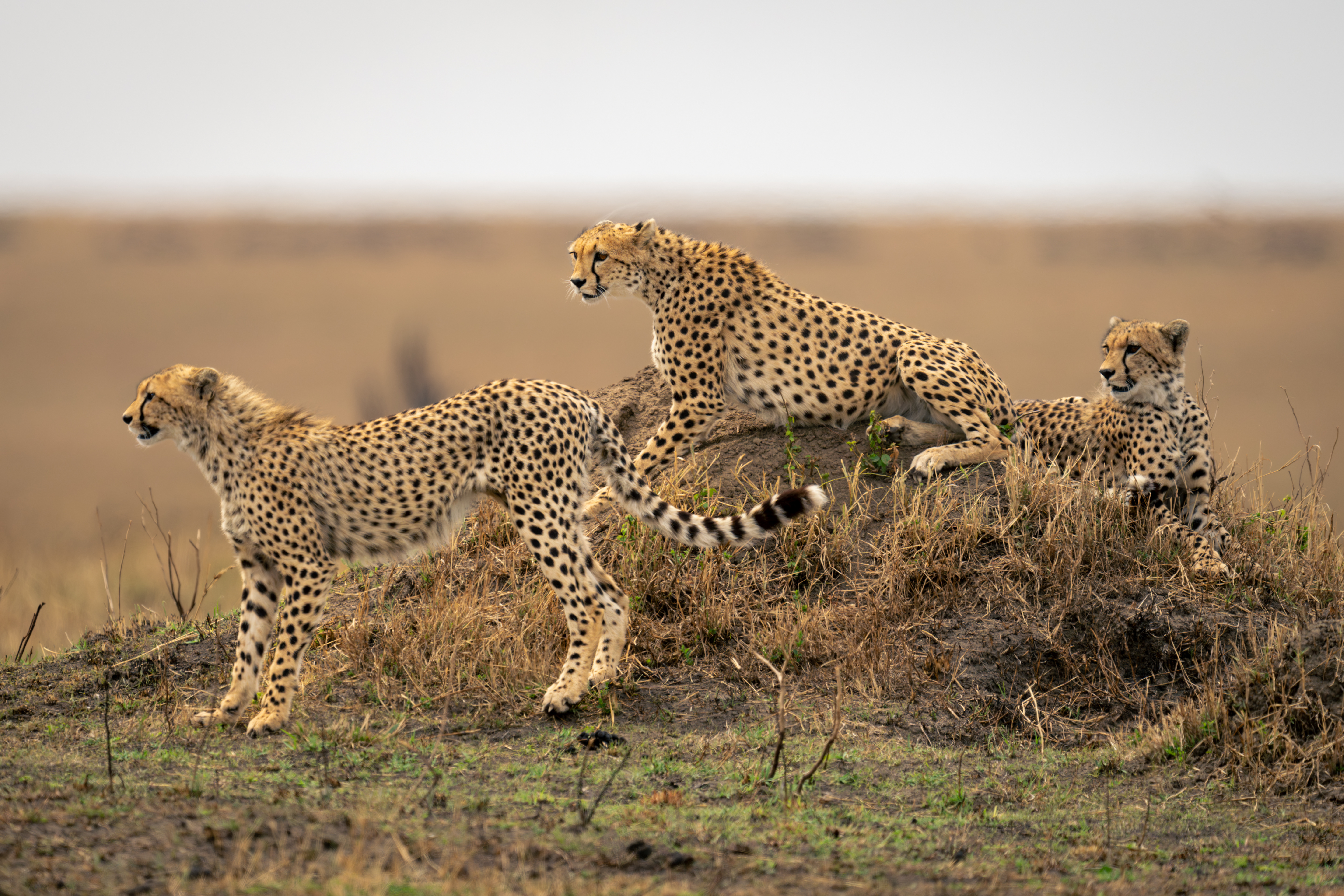
Three cheetahs in the savanna on a termite mound.
Every year on December 4, World Cheetah Day draws attention to one of Africa’s most iconic big cats. Today, there are thought to be no more than about 7,000 cheetahs left in the wild across Africa. Their decline mirrors deeper problems in the ecosystems they inhabit — from collapsing prey bases to degraded rangelands.
The African Wildlife Foundation (AWF) works with governments, communities, and conservation partners to secure landscapes where people, livestock, and wildlife, such as cheetahs, can coexist. We spoke with Dr. Philip Muruthi, AWF’s Vice President of Species Conservation and Science, about what this day should mean for Africa and for cheetah conservation.
Q: World Cheetah Day, marked every December 4, was created to draw attention to the cheetah’s rapid decline across its range. When you look at Africa today, what is the most important message you want people to hear about the status of the cheetah?
Dr. Muruthi: For me, the cheetah is a barometer of ecosystem health. When cheetah numbers fall so sharply that we are talking about only a few thousand individuals left on the continent, it is telling us something is fundamentally wrong with the landscapes they depend on. So the message this World Cheetah Day is simple: if cheetahs are in trouble, our ecosystems are in trouble, and ultimately so are we.
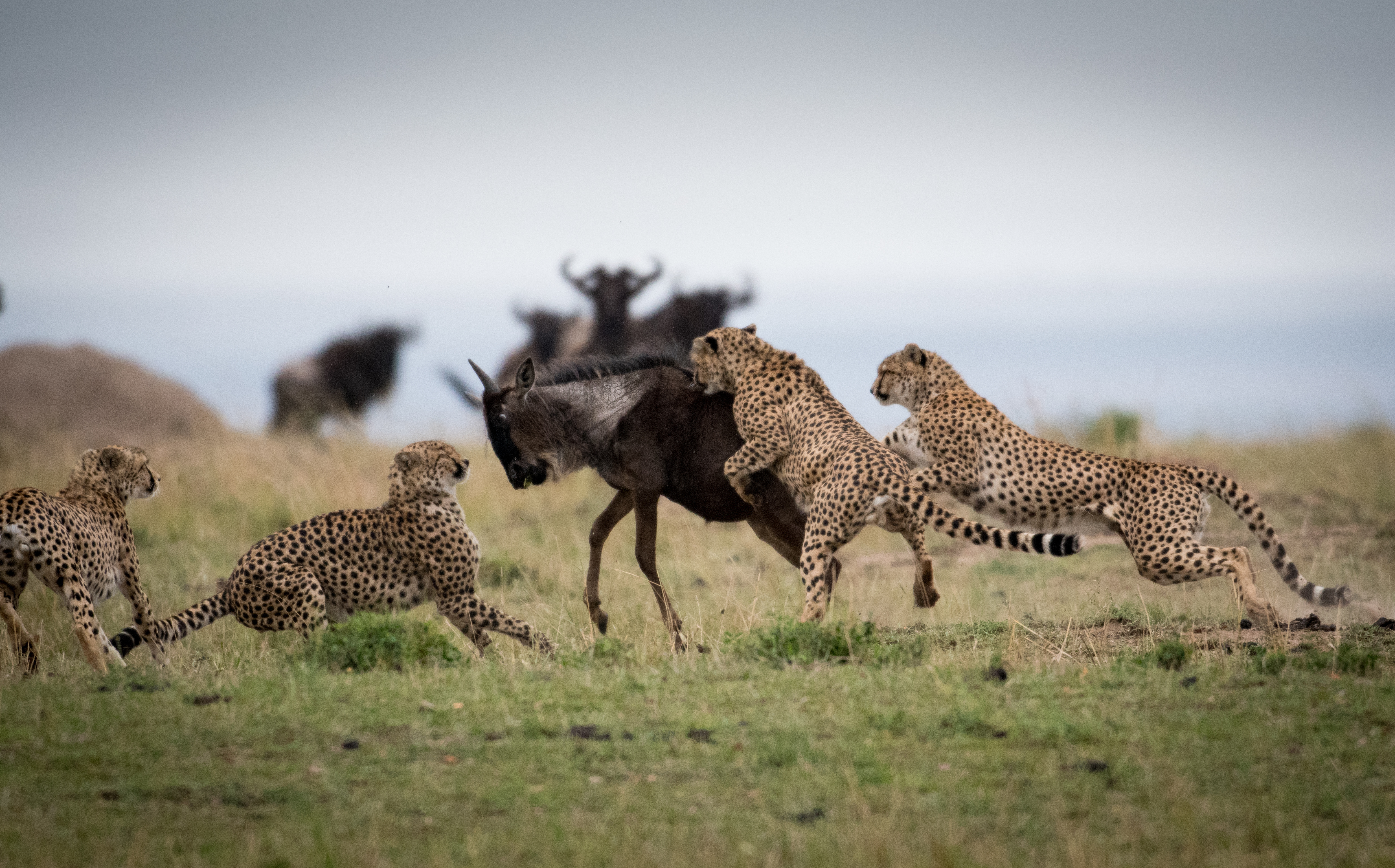
A coalition of cheetahs attacking a wildebeest in the African savanna.
Q: Cheetahs are still classified as vulnerable globally. What are the main drivers of that decline in the African landscapes where AWF works, and how are those drivers changing with climate and land‑use pressures?
Dr. Muruthi: Direct killing matters, but in many places the deeper problem is ecological. Cheetahs are losing their prey and their open hunting grounds. Poorly managed grazing, unplanned farming, and expanding infrastructure turn open grasslands into either over‑grazed dust or dense bush, both of which are bad for grazers and the predators that depend on them.
As climate stress intensifies, these pressures are magnified. In AWF landscapes, our response is to restore prey and support better rangeland management.
Q: Unlike some other big cats, cheetahs often live and hunt in open, often human-populated landscapes. How does this ecology shape the types of conflicts they have with communities, and what does that mean for how we design solutions?
Dr. Muruthi: Because cheetahs favor open country, they often share space with livestock and people rather than staying inside remote protected areas. Conflict is therefore less about cheetahs threatening people and more about occasional attacks on calves, sheep, or goats especially where wild prey has declined.
That means solutions have to be landscape‑wide. We must think about where livestock graze, where wildlife can still move and how to maintain enough wild prey that cheetahs do not depend on livestock. Practical measures like good herding, predator‑proof night bomas and healthier rangelands become as important as law enforcement.
Q: AWF’s cheetah work places strong emphasis on community involvement. Can you describe a landscape where this approach is working and what has changed for both people and cheetahs?
Dr. Muruthi: Across several savanna landscapes, AWF has supported local governments and communities to develop land‑use plans that zone land for farming, settlement, pastoralism and wildlife. The aim is to keep key rangelands and movement corridors open instead of losing them piece by piece.
Where this approach begins to take hold, we see more predictable grazing areas, less encroachment into core wildlife zones, and a stronger tourism story that benefits local people. For cheetahs, the benefit is simple: they still have open country to hunt in, with wild prey around, rather than a continuous wall of fields and fences.
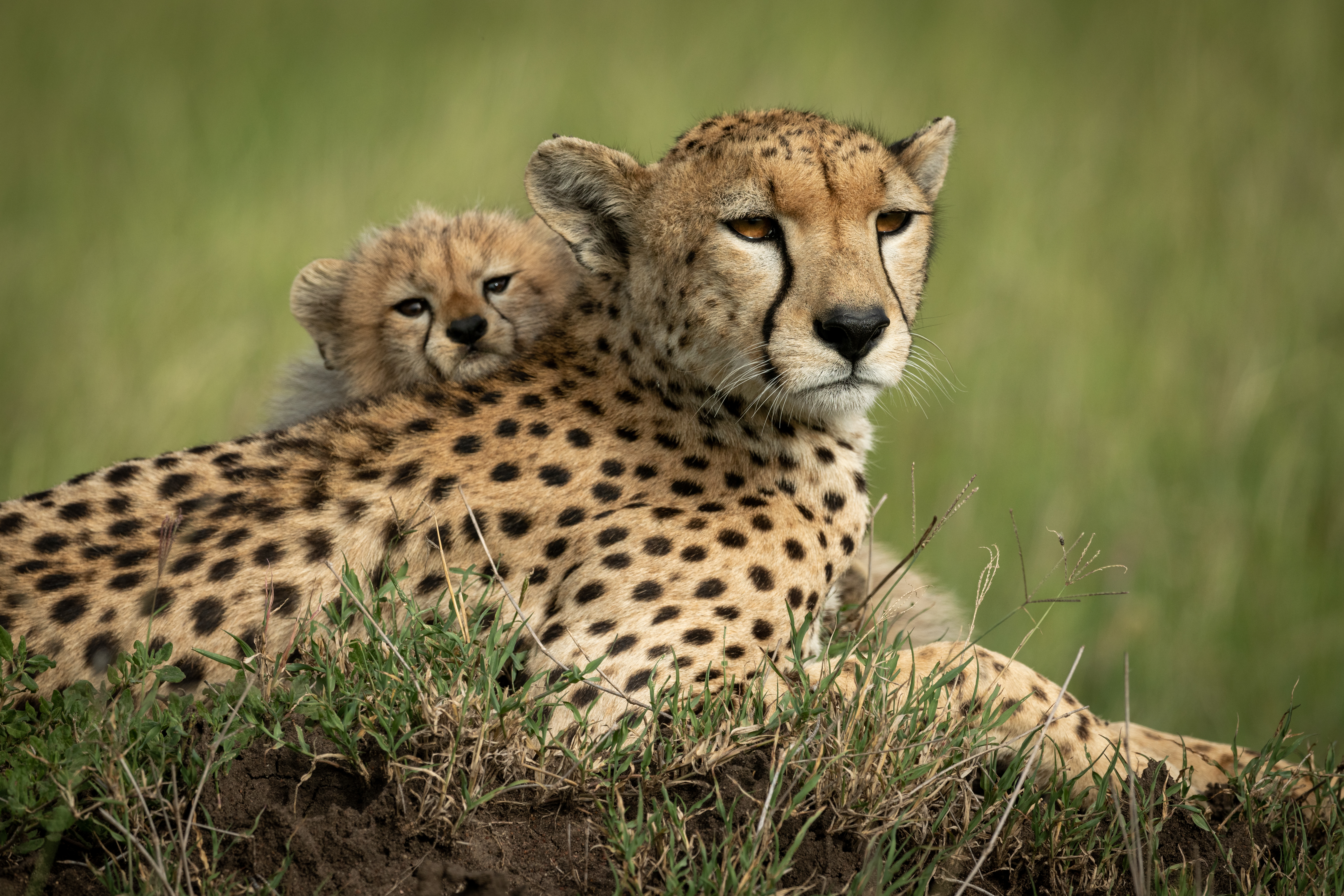
A cub on the back of a cheetah.
Q: When you talk to communities that have lost livestock to cheetahs, what arguments or evidence tend to shift the conversation from retaliation to coexistence? Are there particular incentive schemes or livelihood options you’ve seen really move the needle?
Dr. Muruthi: Communities move when they see two things: reduced risk and real benefit. On the risk side, practical changes such as strengthened bomas, better herding and agreed grazing plans can quickly cut losses. On the benefit side, people respond when wildlife brings jobs, tourism income, or support to local schools and clinics.
Compensation or incentive schemes can help, but they only last when they are locally owned and linked to clear conservation outcomes. In our experience, attitudes shift most when cheetahs and other wildlife are seen as assets in a wider landscape economy rather than just threats to livestock.
Q: Connectivity is critical for cheetahs, which rely on large, open ranges to maintain healthy gene flow. How is AWF working to secure corridors and prevent cheetah habitat from being carved up by fences, roads, and unplanned development?
We treat connectivity as both a science and a planning issue. Ecologically, we map where cheetahs and their prey still move between core areas. Politically and socially, we then work with governments, communities and private landholders to keep those routes open. If we get this right, cheetahs can move, mix, and adapt to climate change instead of being trapped in small, isolated pockets.
Q: Illegal wildlife trade remains a threat, from live cheetah cub trafficking to trade in skins. How serious is this pressure today in East and Horn of Africa landscapes, and what kinds of partnerships are needed to tackle it effectively?
Dr. Muruthi: Illegal trade adds another layer of pressure on already vulnerable cheetah populations. Even removing a small number of cubs or breeding females from the wild can destabilize local groups. Tackling this requires strong cooperation between range states, transit countries, and consumer markets.
AWF’s wider work on illegal wildlife trade shows that no single tool is enough. We need better intelligence and law enforcement, yes, but also community awareness, alternative livelihoods, and cross‑border collaboration so that trafficking of live animals and skins is treated as seriously as other high‑value wildlife crime.
Q: From a science perspective, what are the most urgent research questions on cheetahs that you believe African scientists and institutions should be prioritizing over the next decade?
I would highlight three practical questions:
- First, where are cheetahs still hanging on, and how are they using increasingly human‑dominated landscapes?
- Second, which land‑use and climate scenarios give them the best chance of long‑term survival?
Third, which community‑based approaches most effectively reduce conflict and support coexistence?
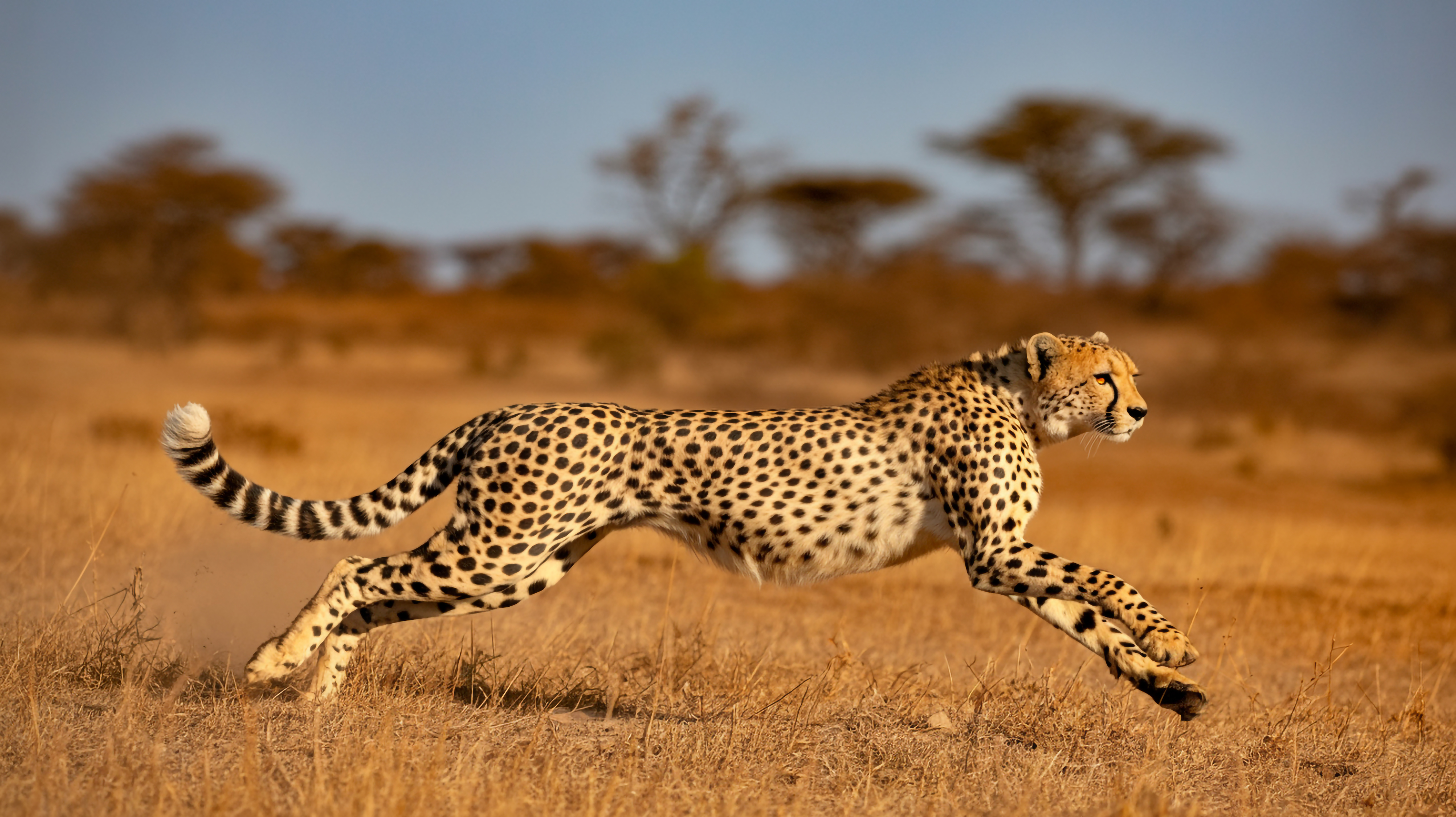
Cheetah sprinting across dry savanna grass.
Q: World Cheetah Day is also an opportunity to highlight African leadership in conservation. Where do you see Africa‑led models offering fresh hope for cheetahs and other wide‑ranging carnivores?
Dr. Muruthi: Kenya’s rhino story has shown how powerful it is when government, private sector, and communities pull in the same direction. A similar model applied to cheetahs—through community conservancies, wildlife‑friendly ranching, and serious landscape‑scale planning—is already giving hope in parts of East and Southern Africa.
These are Africa‑designed solutions: people deciding that wildlife is part of their development vision and structuring land use, governance, and benefit‑sharing accordingly. Scaling and adapting those models across more cheetah range could transform prospects not only for cheetahs, but also for lions, African wild dogs, and many other species that depend on open landscapes.
Finally, what is your call to action on this World Cheetah Day?
Dr. Muruthi: My call is threefold. Governments should embed cheetah conservation into land‑use planning and climate adaptation, not treat it as an add‑on. Partners like AWF must keep investing in programs that put communities at the center and measure success in both ecological and social terms. And citizens can support organizations that champion Africa‑led conservation and hold leaders accountable for protecting wildlife areas.
If we do that consistently over the next decade, World Cheetah Day could become a celebration of recovery, not just a reminder of what we stand to lose.